
Memory Weight in AI Compute Indices: The Underweight Correction
Artificial intelligence investment has created a new generation of thematic indexes designed to capture the companies benefiting from the expansion of computing infrastructure. These indexes often emphasize GPUs, accelerators, networking, cloud platforms, data centers, semiconductor equipment, and power infrastructure. Memory is usually present, but its representation can vary substantially. In some AI compute indexes, memory companies occupy a relatively small position compared with their economic importance to the underlying systems.
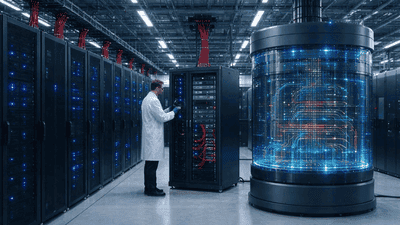
This creates an interesting question for index construction: is memory underweighted relative to the amount of value it contributes to AI computing? If so, could a future adjustment in index methodology produce an “underweight correction,” where memory receives a larger allocation as the market recognizes its strategic importance?
The issue is more complicated than simply increasing the weight of memory stocks. AI compute indexes are built around particular definitions of the AI ecosystem, and memory can be classified as either a direct computing component or a supporting semiconductor technology. The answer depends on methodology, market capitalization, revenue exposure, supply-chain relationships, and the changing economics of AI systems.
Why Memory Can Be Underrepresented
The first reason is straightforward: many thematic indexes are designed around market capitalization or liquidity. The largest publicly traded AI companies may be accelerator designers, cloud platforms, semiconductor manufacturers, or networking companies. Memory suppliers can therefore receive smaller allocations even when their products are essential to those systems.
A second reason is historical classification. AI investment indexes were initially developed when the market narrative focused heavily on computational throughput. GPUs and specialized accelerators were the obvious symbols of the AI revolution. Memory was important, but often treated as one component within a much larger semiconductor bill of materials.
The rise of generative AI has challenged that assumption. High-performance computing is increasingly constrained not only by raw compute capacity but also by memory bandwidth, capacity, latency, packaging, and data movement. HBM has become particularly important because it connects advanced memory technology directly with accelerator performance.
As the architecture of AI systems changes, the definition of what constitutes an AI compute company may also evolve.
HBM Changes the Economic Weight of Memory

HBM is central to the underweight discussion because it has a different economic profile from conventional memory. It is designed to provide very high bandwidth and is integrated closely with advanced AI accelerators. Its production involves complex manufacturing, stacking, packaging, testing, and qualification processes.
This means that memory can capture more economic value from AI infrastructure than its traditional classification might suggest. A conventional index may see a memory company as another semiconductor manufacturer. A system-level analysis may view the same company as a critical supplier of one of the components that determines accelerator performance.
The difference between these perspectives can become important when investors evaluate thematic exposure. An AI compute index with a small memory allocation may appear highly diversified across compute, networking, software, and infrastructure. Yet if memory content per AI system continues to increase, that diversification may not accurately reflect the economic structure of the AI hardware cycle.
From Silicon Content to System Value
Traditional semiconductor analysis often focuses on chip content per device. AI infrastructure requires a broader perspective. A modern AI server can contain accelerators, HBM, CPUs, networking processors, switches, storage, power systems, cooling equipment, and advanced packaging.
The economic value of these components does not grow at the same rate. An increase in accelerator performance can create additional memory bandwidth requirements. Larger AI models can increase data movement and memory capacity needs. Distributed computing can increase networking requirements. Higher server density can increase power and cooling requirements.
Consequently, the weight of each component in an AI index should not necessarily remain constant. A methodology that accurately represented the AI economy several years ago may become less representative as system architecture evolves.
Market Capitalization Versus Economic Exposure

One of the central tensions is the difference between market capitalization and economic exposure. Market-cap weighting has important advantages: it is transparent, liquid, relatively stable, and easy to implement. It also reflects the market value investors currently assign to companies.
However, market capitalization does not directly measure how much revenue a company generates from AI infrastructure. A company can have enormous market value because of software, cloud services, or multiple business segments while having only indirect exposure to memory demand.
Conversely, a memory manufacturer may derive a significant portion of incremental earnings growth from AI-related demand while representing a smaller share of the total market capitalization of the AI ecosystem.
This creates the possibility that an AI compute index is underweight in memory from a fundamental perspective even if its methodology is perfectly consistent from a market-cap perspective.
The Case for an Underweight Correction
An underweight correction would occur when index providers, portfolio managers, or investors begin assigning greater importance to memory within the AI compute ecosystem. The correction could happen through several mechanisms.
The first is a methodology change. An index provider could increase memory exposure based on revenue contribution, AI-related sales, semiconductor value-chain relevance, or a factor-based weighting system.
The second is market capitalization growth. If memory companies experience sustained earnings expansion because of HBM and AI demand, their market values can increase naturally, raising their weights in market-capitalization-based indexes.
The third is investor demand for more direct AI memory exposure. Specialized AI memory indexes, ETFs, or derivatives can attract capital that previously flowed into broader AI products. This can change the relative valuation and visibility of memory companies.
The fourth is a change in how investors define AI infrastructure. If memory bandwidth becomes recognized as a core performance bottleneck, memory may move from a supporting category toward a central category within AI compute classifications.
Not Every Memory Company Benefits Equally

An important complication is that increasing memory weight does not necessarily mean increasing exposure to every memory company equally. The AI memory opportunity is concentrated around specific technologies and product categories.
HBM may have a stronger connection to AI accelerators than conventional PC memory. Enterprise SSDs may benefit from AI data pipelines and storage requirements, but their economics differ from those of HBM. Conventional DRAM can benefit from server demand while remaining sensitive to broader inventory cycles.
Therefore, a simple “memory allocation” can conceal substantial differences. An index that increases its memory weight but allocates most of that increase to conventional memory may not capture the same AI infrastructure exposure as an index focused on HBM and high-performance server memory.
For investors analyzing AI compute indexes, product mix may therefore be more informative than sector labels.
Memory Versus Accelerators
The relationship between memory and accelerators is complementary rather than purely competitive. Faster accelerators require sufficient memory bandwidth to operate efficiently. If memory cannot deliver data quickly enough, additional computational capacity may not translate into proportional system performance.
This creates an important system-level feedback loop. Higher accelerator performance increases the value of high-bandwidth memory. Greater memory bandwidth can support more powerful accelerators. More capable AI models increase the need for both compute and memory. As a result, memory and accelerators can experience synchronized demand growth without having identical economics.
An AI compute index that heavily favors accelerators may therefore capture only one side of this relationship. Increasing memory exposure can provide a more complete representation of the hardware architecture.
ETF Flows Could Amplify the Correction
If investors begin to believe that memory is underrepresented in AI indexes, ETF flows can become an important mechanism for correcting the imbalance. Investors may allocate to specialized memory ETFs, semiconductor ETFs, or broader technology products with larger memory exposure.
Such flows can affect both prices and index weights. Rising memory stock prices increase their market capitalization, potentially increasing their representation in market-cap-based benchmarks. At the same time, stronger investor attention can encourage new products designed specifically around AI memory.
This process can become self-reinforcing, although it is not guaranteed to continue indefinitely. If memory valuations rise faster than earnings, investors may eventually question whether the correction has become excessive.
The distinction between increasing exposure and increasing valuation is therefore critical. A higher memory weight does not automatically imply stronger future returns.
Index Derivatives Make the Difference More Visible
Index derivatives can provide another lens for studying the underweight correction. Futures and options allow investors to compare expectations around AI compute, semiconductors, memory, and broader technology markets.
Suppose an AI compute index remains relatively stable while a memory index experiences a sharp rise in implied volatility. That divergence may indicate that investors perceive greater uncertainty around memory pricing, capacity, or HBM demand than is reflected in the broader AI narrative.
Conversely, if memory index volatility falls while AI compute volatility remains elevated, investors may be distinguishing between relatively predictable memory fundamentals and uncertainty around technology valuations.
The relationship between the two derivatives markets can therefore provide information beyond their underlying price performance. Correlation, volatility spreads, option skew, and changes in futures positioning can all help explain how investors are interpreting the evolving AI hardware structure.
When Underweight Becomes Overweight
The correction itself contains a potential risk. If investors aggressively increase memory exposure because HBM is perceived as a critical AI bottleneck, the resulting valuation expansion can eventually move ahead of fundamentals.
Memory remains a capital-intensive and cyclical industry. Strong pricing creates incentives for manufacturers to invest in additional capacity. As production expands, supply conditions can change. Qualification cycles and technological barriers may slow this process, but they do not eliminate the fundamental relationship between profitability and future capacity.
An AI compute index that increases memory exposure during a period of peak optimism could therefore become vulnerable if the market moves from shortage expectations toward normalization.
This is why index construction should distinguish between structural AI memory demand and cyclical memory pricing. The two can rise together for a period but do not necessarily remain synchronized indefinitely.
A More Flexible Index Design
A more sophisticated AI compute index could address the underweight issue through multiple layers of exposure. Instead of relying entirely on market capitalization, it could combine company size with AI revenue exposure, memory intensity, technological relevance, and liquidity.
Another approach would be to divide the index into functional categories such as compute, memory, networking, storage, packaging, manufacturing equipment, power, and data-center infrastructure. Each category could receive a strategic allocation, with periodic adjustments based on changes in the AI ecosystem.
Such an approach would make the index more responsive to technological change, but it would also introduce greater methodology complexity. Active decisions about what qualifies as “AI exposure” can create new forms of subjectivity.
There is therefore no universally correct weighting system. Market-cap weighting emphasizes investable market value, while thematic weighting attempts to represent economic relevance. The appropriate choice depends on the objective of the index.
Three Signals to Watch
The first signal is the relationship between memory earnings growth and AI compute earnings growth. If memory earnings begin accelerating faster than the broader AI hardware group, an underweight may become increasingly visible.
The second is the evolution of memory content per AI system. Rising HBM capacity, additional memory stacks, and increasing bandwidth requirements can change the economic importance of memory even without a dramatic increase in the number of AI servers.
The third is index and ETF flow behavior. If capital begins moving from broad AI products toward specialized memory products, the market may be expressing a preference for more direct exposure to the hardware bottleneck.
These signals should be considered together rather than independently. A strong memory stock rally without improving fundamentals may reflect positioning, while strong earnings growth without increased index representation may indicate a methodology lag.
Different Investor Perspectives
A technology-focused investor may argue that accelerators remain the primary source of AI computing value, making a relatively modest memory allocation reasonable. A semiconductor analyst may take a different view, emphasizing that compute performance is increasingly dependent on memory bandwidth and capacity. An index designer may focus on liquidity and market capitalization, while a thematic investor may care more about incremental AI revenue.
These perspectives can all be valid because they answer different questions. The central issue is not whether memory should automatically receive a larger weight, but whether the selected index methodology continues to represent the economic structure it claims to track.
For investors comparing multiple AI ETFs and indexes, this distinction is particularly useful. Two products can both be labeled “AI,” yet one may have substantial exposure to memory and storage while another concentrates primarily on compute, software, or cloud platforms.
Conclusion
The potential underweight of memory in AI compute indexes reflects a broader challenge in thematic investing: technological importance and market capitalization do not always evolve at the same speed. AI computing has increasingly shifted from a simple processor-centric model toward a complex system involving accelerators, HBM, networking, storage, advanced packaging, power, and cooling.
Memory sits near the center of that transformation. HBM has strengthened the connection between memory economics and AI accelerator performance, while expanding AI infrastructure continues to increase the importance of high-performance server memory and storage.
An underweight correction could emerge through changing index methodologies, rising memory market capitalization, specialized ETF flows, or a broader reassessment of what constitutes AI infrastructure. But the correction should not be interpreted as a one-directional investment signal. Memory remains cyclical, and increased index exposure can eventually amplify downside risk as well as upside participation.
The most useful perspective is therefore to treat memory weight as a measurement of how the financial market currently defines AI computing. If memory receives a small allocation despite rapidly increasing system-level importance, the gap may reveal a methodological lag. If memory weights rise sharply after a period of strong performance, the market may already be pricing much of that structural recognition.
Ultimately, the evolution of AI compute indexes will depend on whether index designers continue to view memory as a supporting component or increasingly recognize it as a core layer of computing infrastructure. The answer will influence ETF composition, index derivatives, capital flows, volatility relationships, and the way investors measure exposure to the next phase of the AI hardware cycle.